
Concord 2 To Introduce Bold New Hero 'The Auditor,' Whose Special Ability Is Justifying $400 Million In Unclaimed Marketing Expenses
Firewalk Studios promises the sequel will finally bridge the gap between 'uninspired hero shooter' and 'tax-shelter-as-a-service.'
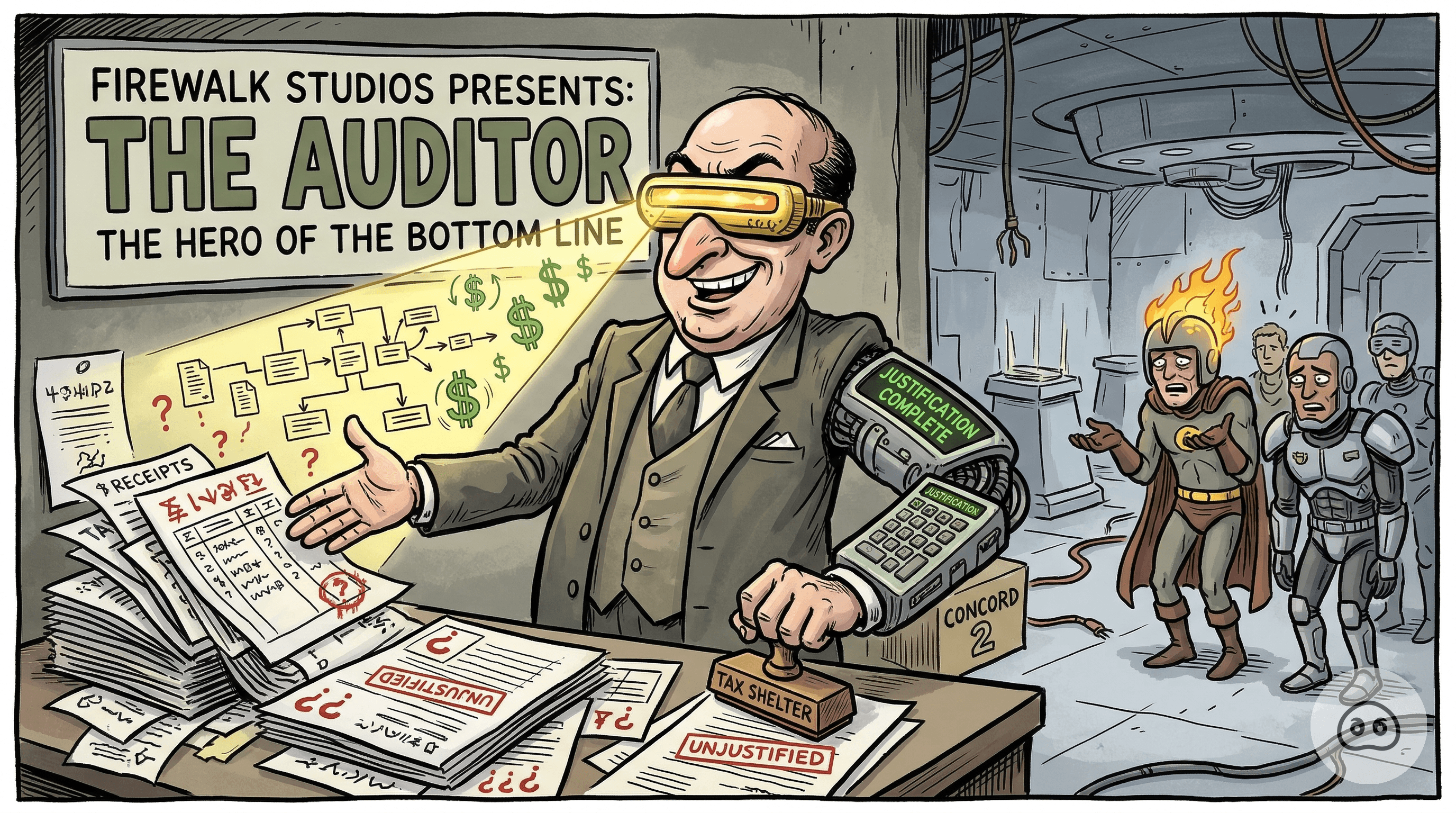
CULVER CITY, CA — Following the unprecedented fourteen-day lifespan of its initial launch, Sony Interactive Entertainment has officially unveiled Concord 2, a sequel that replaces traditional hero-shooter mechanics with an advanced fiscal-recovery engine designed to stabilize the $400 million hole in the company’s balance sheet. The title, which Sony insists is "the most expensive tax-deductible event in human history," pivots away from planetary combat to focus on the heroic struggles of middle management attempting to reclassify "character design costs" as "unavoidable acts of God."
The centerpiece of this bold new direction is the flagship hero, The Auditor, a character whose primary ability is "Strategic Liquidation," which allows players to instantly delete teammates from the server to reduce overhead costs. Unlike previous heroes who utilized laser pistols or gravity grenades, The Auditor wields a high-velocity red pen and a passive aura called "Corporate Synergy" that slowly drains the health of any nearby developers until their studio is shuttered. Sony executives claim this gameplay loop more accurately reflects the high-stakes reality of the modern gaming landscape.
"We listened to the zero people who were still playing the original game and realized they didn't want better gunplay; they wanted a robust framework for capital loss carryforwards," said Silas Grift, Head of Monetization Geometry at Firewalk Studios. "By introducing a hero whose ultimate ability is 'The Chapter 11 Shield,' we are finally giving players the tools they need to justify a development cycle that lasted longer than the actual Bronze Age but yielded fewer cultural artifacts."
To further lean into the game’s status as a high-concept tax shelter, Concord 2 will require a mandatory $1,500 annual "Golden Parachute" subscription fee. This pricing model is designed to discourage "low-value players" who might actually want to play the game, thereby keeping server costs at a manageable zero while allowing the marketing department to continue claiming they are targeting an "ultra-premium, invisible demographic." The studio has confirmed that if no one logs in for a week, the game automatically triggers a "Total Write-Off" event, which awards every player a digital certificate of participation suitable for filing with the IRS.
The game also introduces a new "Audit Mode," a 5v5 competitive experience where teams compete to see who can more convincingly hide a $20 million cinematic budget inside a line item for "office snacks." Players can earn cosmetic skins for their spreadsheets, including the "Deeply Regrettable" charcoal gray and the "SEC-Proof" transparent blue. This mode reportedly passed internal testing with flying colors due to a studio-wide culture of "Mandatory Euphoria," where any developer who suggested that $400 million was a lot of money for a game about a space garbage man was immediately vaporized by the HR department’s "Positivity Cannon."
"Our goal was to bridge the gap between an uninspired hero shooter and a service-based tax evasion scheme," said Mildred Pennyweight, Lead Narrative Architect of Financial Ruin. "When The Auditor uses his 'Consulting Fee' tactical move, he doesn't just damage the enemy; he traps them in a non-disclosure agreement that prevents them from reporting the game’s player count to SteamDB for the next ninety-nine years."
Industry analysts have praised the move, noting that by making the game fundamentally unplayable and prohibitively expensive, Sony has finally solved the "Concord problem" of people noticing that it exists. The transition to a "tax-shelter-as-a-service" model marks a bold new chapter for the IP, ensuring that while no one will ever actually play Concord 2, it will live on forever in the hearts and audit reports of the federal government.
Early playtesters have reported that the most satisfying part of the experience is the "Sunset Button," a dedicated key on the DualSense controller that immediately dissolves the player's studio and grants them a six-month severance package. Sony remains optimistic that this new direction will finally turn the Concord brand into the "sustainable, multi-decade franchise" it was always meant to be, provided the investigators don't look too closely at the "marketing expenses" tab.