
Ubisoft Unearths Scrolls Proving 16th Century Started 72 Hours Early For High-Net-Worth Samurai
New archaeological evidence suggests the Sengoku period was a tiered-access event that prioritized wealthy landowners who pre-ordered the 'Ultimate Shogun' bundle.
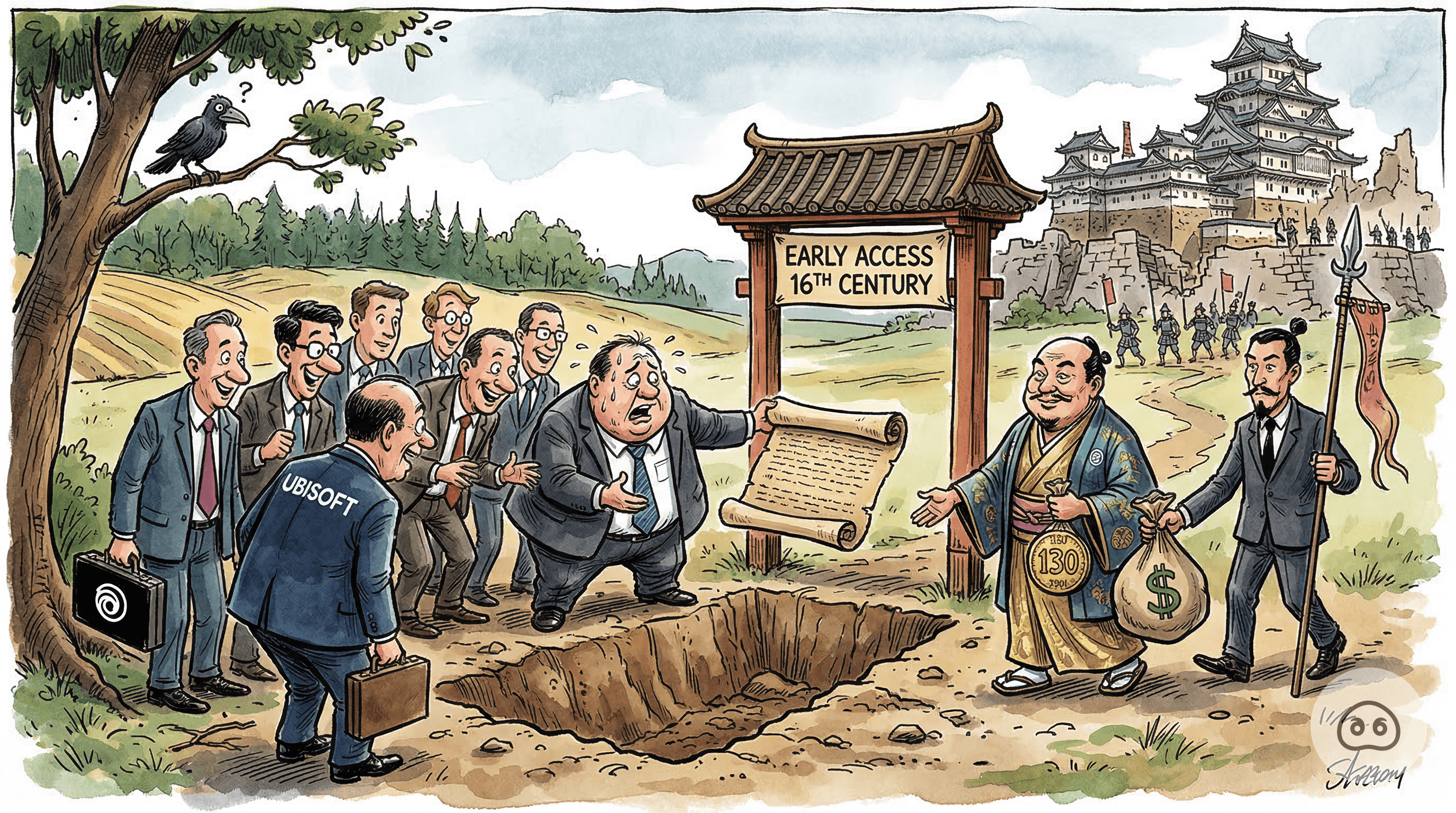
KYOTO — A team of Ubisoft-funded historians has discovered a cache of 16th-century scrolls confirming that the timeline of the Sengoku period was not a linear progression of time, but a tiered temporal experience based on individual liquid assets. The scrolls, found buried beneath a pile of unredeemed rice-tax vouchers in a Kyoto basement, reveal that the year 1579 actually began on a Tuesday for the landed gentry, while the peasantry was forced to wait until Friday to experience the same reality.
According to the research, Oda Nobunaga’s unification of Japan was gated behind a series of mandatory "Battle Pass" challenges that were only accessible to those who had already invested heavily in the "Azure Dragon" silk cosmetic pack. Scholars now believe that the famous warlord didn't just command armies; he curated exclusive drop events for his most loyal retainers who had pre-purchased the rights to exist in the province of Iga before the general population.
"We always strive for 1:1 historical fidelity, and that includes the inherent unfairness of the 16th-century class system," said Percival Moneybags, Lead Historical Monetization Consultant at Ubisoft. "If a samurai in 1580 wanted to look cool while decapitating rivals, he didn't just find gear in the woods; he traded several sacks of high-quality grain for a pre-order bonus. We are simply digitizing the ancient tradition of being better than poor people. To suggest that history belongs to everyone equally is a dangerous, non-profitable ideology that we intend to patch out by the second quarter."
The research also sheds light on the "Shadow Strike" technique, revealing it was a literal requirement for any shinobi who hadn't paid their "Early Bird" tribute to the Iga clan elders. Anthropologists note that the concept of "Day One" was highly subjective in feudal Japan, as the sun technically rose several hours earlier for anyone holding a "Legendary Edition" golden fan. This digital feudalism ensures that only those with the proper credit limit can fully appreciate the nuances of 16th-century espionage.
"The outrage over pricing ignores the fact that history has always been pay-to-win," noted Dr. Alistair Grift, Professor of Comparative Greed at the Sorbonne. "By charging $130 for a season pass to the 1500s, the developer is offering the most immersive experience possible: the feeling of being a disenfranchised peasant watching your betters enjoy the future before you. The real historical breakthrough here isn't the combat; it's the $40 upcharge for the right to breathe the air of 1582 before the peasants get their hands on it."
Further analysis of the scrolls suggests that the internet wasn't just a 21st-century invention but a mystical requirement for spiritual "installation" into the physical world. Ancient monks reportedly spent hours attempting to connect their souls to a central server before they were allowed to participate in the local harvest, a practice being honored through mandatory launch-day connectivity requirements. For a game that celebrates the shadows, Ubisoft is ensuring the light only shines on those who have linked their Ubisoft Connect accounts to their ancestral spirits.
At press time, the historical team was reportedly investigating new evidence that the French Revolution was actually a dispute over a "limited-time" guillotine skin that was only available to those who pre-ordered the "Reign of Terror" bundle. Stay sloppy, pigs.